
Durable upholstery fabric, and how to tell what fabric you have
Read the care tag under a seat cushion, on the deck or under the frame: it names the fiber and the cleaning code (W, S, W/S or X). If the tag is gone, the maker's model number, the receipt and the weave narrow it down, a burn test is only a clue and never done on the furniture, and a hidden-spot test decides how it is cleaned. For daily use with children or pets, a tightly woven synthetic tagged W or W/S is the most durable choice and the easiest to clean. WATERFALL's fabric furniture cleaning covers every fabric except genuine leather, and a photo of the tag confirms how we clean it; see the prices page for each piece. WATERFALL cleans couches at your home from $130: call (747) 214-6199.
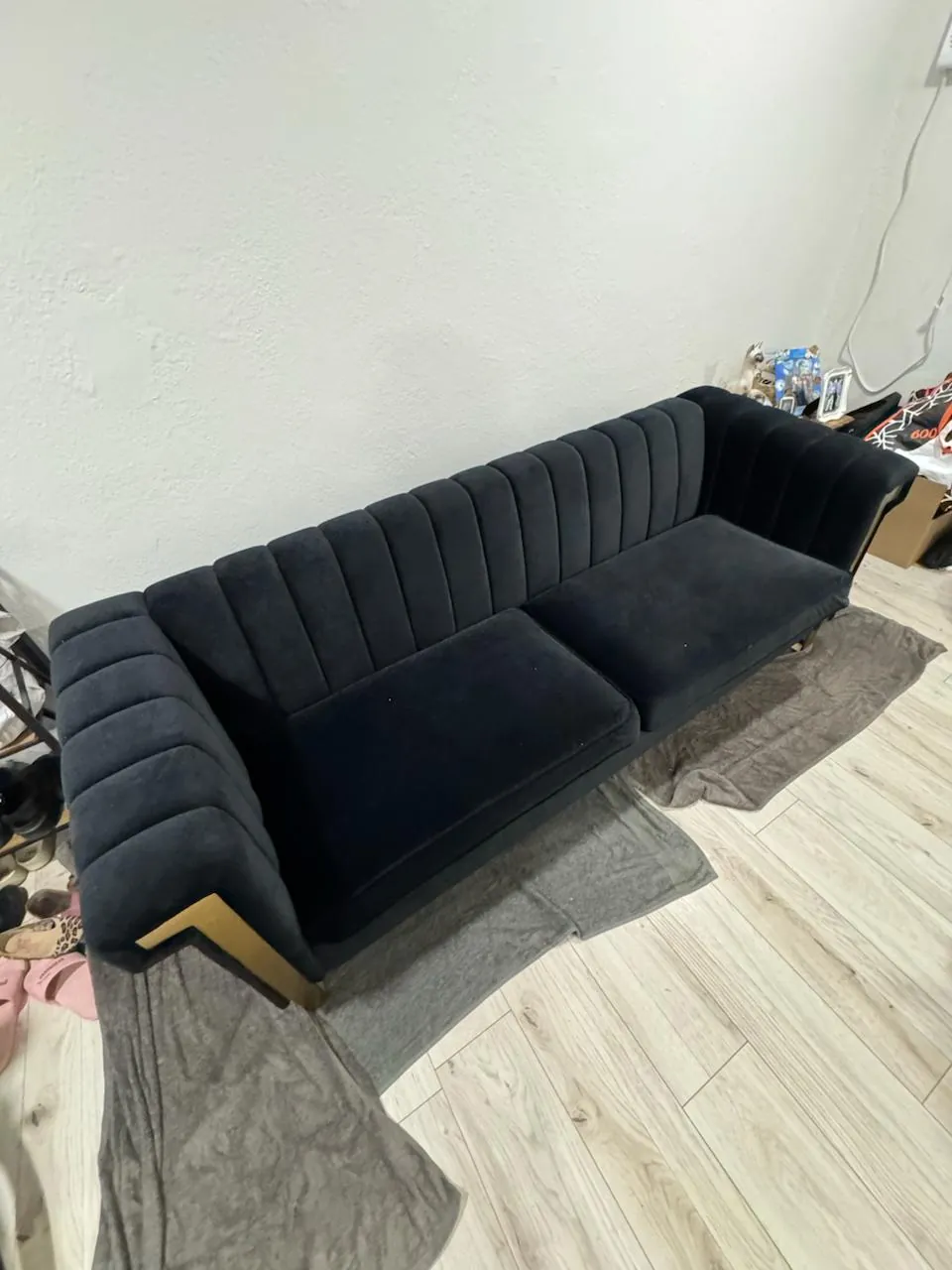
How do you tell what fabric your couch is?
Read the tag first; the maker's name, the receipt and the look of the weave fill in the rest.
- the tag under a seat cushion or on the frame lists the fiber, such as polyester, and the cleaning code
- the maker's name and the model number lead to a care guide or product page
- the receipt or the order page often names the fabric
- the look of the weave: a fine, tight, soft weave is usually microfiber, a looped surface is bouclé, a soft pile is velvet or chenille
How can I tell what fabric my couch is made of when the tag is missing?
Look for a second label, ask the maker, then judge the weave; the cleaning code is not the fiber.
Until you know, treat the fabric as if it may not take water: vacuum, blot and test a hidden spot first.
- labels hide on the deck under the seat cushions, inside a zipped cushion cover, on the black dust cover under the frame and on the back of the frame
- a model or order number lets the maker or the store tell you the fabric
- W, S, W/S or X says how it may be cleaned, not what it is made of: a polyester and a linen can both be W/S
- a pile is velvet or chenille, loops are bouclé, and a fine suede-like nap is microfiber; these name the weave, not the fiber
- an upholsterer or a textile-testing lab can identify a loose thread when it matters for a claim or a repair
How do I tell if my couch fabric is natural or synthetic?
The label says it, listing the fibers with the largest share first. Without one, cotton and linen feel dry and crease, wool feels warm and springy, and synthetics feel smoother and more even; finishes and blends make this a guess, not a test.
A burn test on a loose thread, outdoors and never on the couch, sorts fibers into families: cotton and linen burn like paper and leave soft gray ash, wool and silk smell of burning hair and go out on their own, and polyester, nylon and acrylic melt into a hard bead. A blend gives a mixed result, so it is a clue, not a proof.
It matters for cleaning because natural fibers take in water: cotton and linen can shrink, ring or brown, so they are cleaned with less water and dried faster than a synthetic.
What should I tell a couch cleaner about the fabric?
Give the cleaning code and the fiber from the tag, the color, the age of the piece, any cleaner already used on it and what the marks are. A photo of the whole piece and one of the tag is better than any description. Text both to (747) 214-6199 and we confirm the details.
What types of upholstery fabric do you clean?
Every upholstery fabric: cotton, linen, polyester, microfiber, velvet, chenille, wool, silk, bouclé and performance fabrics among them, and pieces with an S or X tag, whose method we confirm from a photo of the tag. For rarer fabrics such as mohair and tapestry, text a photo too. Faux leather and suede we clean as well; smooth leather we do not.
Does the upholstery material change the cleaning approach?
Yes. The fiber decides how much water it tolerates, the weave decides how deep the dirt sits and the finish decides which product is safe. The method stays the same, but the moisture, the agitation and the product change from one fabric to the next. See fabric by fabric.
What is the most durable couch fabric, and what rub count should I look for?
A tightly woven synthetic: performance polyester, solution-dyed acrylic or olefin, and microfiber resist abrasion, fading and stains better than linen or loosely woven cotton. Rub counts come from the Wyzenbeek test in double rubs, and the next answer gives the usual ranges; the Martindale test counts cycles and does not convert to double rubs, and a rub count says nothing about snagging or cleaning.
Check the tag as well: a W or W/S code means a spill can be cleaned with water.
What is a good rub count for a sofa?
A rub count measures abrasion resistance in double rubs. Around 15,000 is commonly given as suitable for a family sofa, and 30,000 and above for heavy daily use; a higher number means the fabric wears longer. The count says nothing about how the fabric is cleaned, so the tag still decides that.
What is the best fabric for a couch if I have pets?
A tightly woven synthetic: microfiber, performance polyester or olefin. Claws slide off a tight weave, hair brushes off a smooth surface and accidents clean out of a synthetic that is tagged W or W/S.
Ask for a swatch and the cleaning code before you buy; an S or X tag means an accident cannot be cleaned with water. For hair, see pet hair on a couch; for an accident, pet stains and odors.
- good: microfiber, performance polyester, olefin, tight canvas
- workable: performance velvet, which resists claws but holds hair
- poor: bouclé and other loops, open or slubby weaves, long-pile chenille, loose linen and cotton, which snag or soak up accidents
- leather wipes clean but scratches, and we do not clean genuine leather
How do you clean a slipcovered sofa from Restoration Hardware or Pottery Barn?
Follow the label sewn into the slipcover and the maker's care sheet for that fabric: slipcovered does not mean washable. Where the label allows washing, wash every piece of the set together on cold and gentle, close the zippers first, skip bleach, tumble low only until the covers are slightly damp and put them back on the frame damp so they dry to shape; photograph how they fit before you take them off.
A missing label, linen, velvet or a cover with piping is safer professionally cleaned, because a shrunk cover will not go back on. For a cover that stays on the sofa, text a photo of the sofa and the tag to (747) 214-6199 and we confirm what can be done.
How is a Togo or Ligne Roset sofa cleaned?
By a specialist, and the covering decides how: read the care label inside the cover and the maker's care guide, which say whether the cover is dry-cleaned or cleaned on the sofa, and do not put a quilted cover in a washing machine.
A Togo is covered in fabric, in a microsuede such as Alcantara or in leather, and we do not clean smooth leather; for a fabric cover, text a photo of the sofa and the tag to (747) 214-6199 and we confirm how we clean it.
How can I tell what fabric an antique chair has?
Ask three questions: what fiber it is, how it is woven and whether it is the original cover. Look under the seat at the dust cover and the frame with a flashlight and a magnifier: older layers, old tack holes and stray fibers show whether the chair was re-covered.
Period upholstery is often wool, silk, horsehair, cotton or linen, in damask, brocade, tapestry or velvet weaves. Do not burn or spot-test a valuable piece; an antique upholsterer or a textile conservator can identify a loose thread. Identify the fabric before any cleaning, and text a photo of the chair to (747) 214-6199: some old fabric is better left alone.
Can you clean delicate upholstery fabrics?
Often yes, with a gentler method: less water, less agitation and a test on a hidden spot. Silk, rayon, viscose and loosely woven fabrics are the delicate ones. Text a photo of the piece and the tag to (747) 214-6199, and we confirm how we clean it.
Can delicate rugs and sofas be cleaned the same way?
Not exactly. A delicate sofa and a delicate rug both need less water and gentler brushing, but a rug also has its own dyes and backing to protect. For rugs, see rug cleaning.
How do you handle furniture with water-sensitive fabrics?
Test first, and keep water out if the tag or the test says it will harm the fabric. A hand-dyed fabric may bleed, and a tag marked S or X means water is not allowed. For an S or X tag, a photo of the tag tells us how we clean it: text it to (747) 214-6199.
Can you clean vintage or antique couches without damaging them?
Sometimes. Old fabric may have weak fibers, dyes that run and stuffing you cannot see, and often no tag. A hidden-spot test shows more than a guess, and some pieces are better left alone. Text a photo of the piece to (747) 214-6199; we cannot promise a result without seeing it.
Is it safe to clean vintage or reclaimed furniture?
It is safe when the fabric is sound and the cleaner tests first and uses little water. Newer fabric and older fabric both clean well when they are in good condition; it is the worn, thin or unknown fabric that carries the risk.
Can you clean tufted and button-back upholstery?
Yes. The folds and buttons trap soil, so each fold is worked with a brush before the extraction. WATERFALL's own jobs include tufted chairs and tufted sectionals; more of them are on the before and after page.
Can you clean a textured or woven couch fabric?
Yes. Texture and a loose weave hide soil deeper in the fabric, so the shampoo is worked in with a brush and the extraction pulls the dirt out of the weave. Avoid a wet clean on a loose weave, which can pull or distort the threads.
Can pilling be removed during sofa cleaning?
No. Pilling is small balls of worn fiber on the surface, and cleaning lifts dirt rather than the pills. A fabric shaver removes pills, carefully, and it is best done before or after a cleaning, not instead of one.
Can you revive upholstery that looks faded or worn?
Cleaning brings back color that dirt has dulled, and it cannot bring back color that sun has bleached or fabric that has worn thin.
Why is one side of my couch lighter than the other?
Either the sunny side has faded, or the side you sit on has darkened with body oils and dirt. Look at a cushion you never use: if it matches the lighter side, the used side is dirt and cleaning will even it out. If the window side is lighter than the underside of the cushions, that is sun fading, which cleaning does not reverse.
Should I clean brand-new upholstery?
No, not until it needs it. New fabric is clean, and the maker's care guide says how to look after it. Clean it when a spill or the first signs of soil appear, and a used piece you have just bought is cleaned before it goes into regular use.
Can you follow my designer's care instructions for a couch?
Yes, we read them. Send the instructions with a photo of the piece to (747) 214-6199. If they call for solvent only or no liquid at all, we tell you how we clean it before you book.
Questions and answers
How do you clean a Restoration Hardware or Pottery Barn slipcovered sofa?
Wash a removable slipcover only as its sewn-in label says: all pieces together, cold and gentle, low heat until damp, then back on the frame to finish drying. Slipcovered does not mean washable, and many linen and velvet covers are dry-clean only. For a cover that stays on the sofa, text a photo of the tag to (747) 214-6199 and we confirm what can be done.
Can a Togo or Ligne Roset sofa be professionally cleaned?
Yes, by a specialist, and the cover's care label and the maker's care guide say how. A quilted Togo cover is not one for a washing machine, and we do not clean genuine leather; for a fabric Togo, text a photo of the sofa and the tag to (747) 214-6199.
What is the most durable fabric for a couch?
Tightly woven synthetics such as polyester, microfiber and performance fabrics wear best. Durability and ease of cleaning are two questions, so check both.
What's a good rub count for a sofa?
Rub count measures abrasion resistance in double rubs, and a higher number means the fabric wears longer. It says nothing about how the fabric is cleaned.
How to tell the fabric type of a couch?
Read the tag, then the maker's name and the look of the weave. A photo of the whole piece and of the tag settles it for us.
Can you clean antique upholstered chairs?
Sometimes. Old fabric may have weak fibers and no tag, so text a photo of the chair to (747) 214-6199; we cannot promise a result without seeing it.
Do you clean mohair and tapestry fabrics?
Yes. These are rarer fabrics, so text a photo and the tag first and we confirm how we clean them.
Can you clean an heirloom couch?
Sometimes. A hidden-spot test shows more than a guess, and some pieces are better left alone.
Prices and booking
More guides
- Upholstery fabrics: all guides
- Upholstery cleaning codes: W, S, W/S, X — W is water-based, S is solvent only, W/S is either and X is vacuum only; read the tag before anything touches the fabric.
- How to clean a microfiber, linen or velvet couch — Each fabric reacts differently to water; the tag and a hidden-spot test decide, and light moisture with strong extraction suits most.
- Can you steam clean a couch? By fabric — Fabric tagged W or W/S can; for S and X tags, a photo of the tag tells us how we clean it.
Sources: IICRC (The cleaning and restoration industry's standards body, for how professionals clean fabrics and carpet.)