
How to get blood, mud and bodily fluids out of carpet and a couch
Blood and spit-up are protein stains, which set in heat, and mud is soil that spreads when it is wet. WATERFALL's fabric furniture cleaning takes over when blotting leaves a mark, and the prices page lists the price of the piece. WATERFALL cleans couches at your home from $130: call (747) 214-6199.
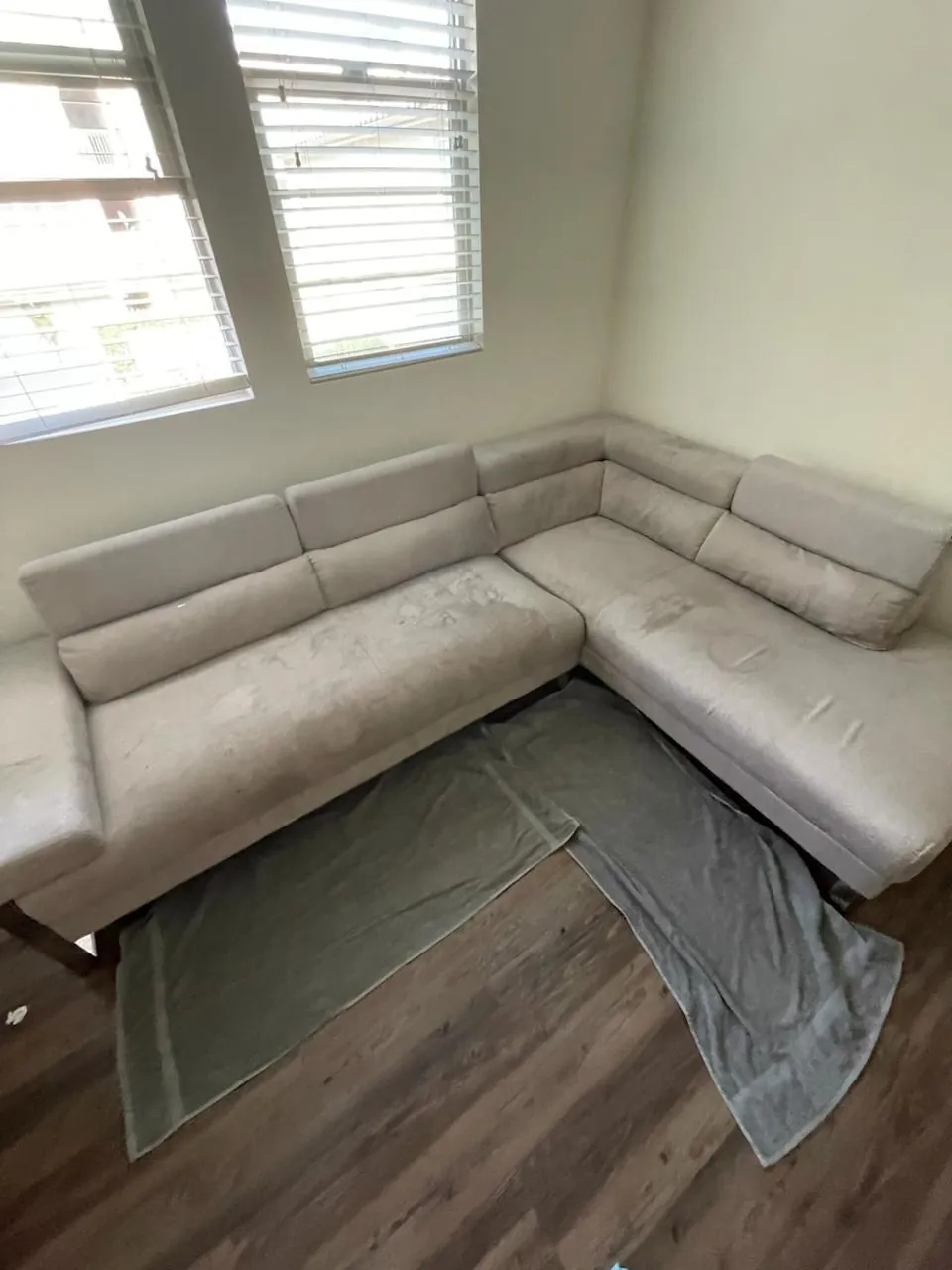
How do you remove a blood stain from upholstery?
With cold water and blotting, as soon as you can; hot water cooks the protein in blood into the fiber. Press a white cloth wetted with cold water on the stain, work from the edge inward, change the cloth as it picks up, and blot dry.
If a mark is left, a few drops of dish soap in cold water on a clean cloth come next. Hydrogen peroxide lightens some fabrics as well as the blood, so test it on a hidden spot first, and do not use it on a dark fabric.
How do you get blood out of carpet?
Blot with cold water, again and again, with a fresh part of the cloth each time, then use a few drops of dish soap in cold water and rinse by blotting. Keep the carpet cool and the cloth moving; scrubbing frays the pile and spreads a small stain into a large one.
Dried blood is harder, since it has set into the fiber, but it often lightens with patience. An enzyme cleaner made for fabric can help on a protein stain, and it needs a test and a thorough rinse.
- Put on disposable gloves.
- Blot with a white cloth and cold water, from the outside toward the center.
- If a mark stays, test hydrogen peroxide from a pharmacy on a hidden spot; if the color holds, dab a little on, let it fizz and blot.
- Rinse by blotting with cold water and press a dry towel down.
- No hot water, and no chlorine bleach on carpet: it takes the color out.
Why is cold water used on blood and not hot?
Because blood is mostly protein, and heat makes protein clot and bond to fibers, as an egg does in a hot pan. Cold water keeps it loose, and that is why every careful guide says to keep a blood stain cool.
How do you remove baby spit-up from upholstery?
Wipe up the solids, blot, and rinse with cool water on a cloth, then clean with a few drops of dish soap in cool water. Spit-up is milk protein with stomach acid, so it also leaves a sour smell if any is left in the cushion, and that is the part that a rinse by blotting is for.
Dry the spot with a fan. If a smell returns after it dries, the milk is still in the padding, and a deeper clean is needed. Check the tag before you add water, skip heat to dry it, and put the cushion back only when it is completely dry.
How do you get muddy paw prints off a couch?
Let the mud dry first: vacuum it with the upholstery tool, seams included, check the tag, and only then blot the stain with a little dish soap in cool water, with the cleaner on the cloth and not on the couch. Wet mud pushed into the fabric spreads and drives the clay in; dry mud lifts off as crumbs.
Pet households collect mud, oil and hair on the same cushions, and cleaning the whole cushion works better than treating a paw print at a time. If the dog has also had an accident, see pet stains and odors, a separate option priced per stain and treated with enzyme products.
How do you get trail dirt and clay out of a couch after a hike?
Usually; trail dirt is dust and clay, and it comes out of fabric in two steps: vacuum it dry, then clean the stain left behind with soap and cool water. Fine red or brown clay can tint light fabric, so a light-colored couch may keep a faint shadow.
What if the blood or spit-up has dried?
It can still lighten, and it may not vanish. Dampen the stain with cold water to loosen it, blot, and repeat patiently with cold water and a little dish soap; do not switch to hot water or to bleach, which can leave a worse mark.
A dried stain on a light or S-coded fabric is one to ask about by text; the guide to old and set-in stains covers what changes with age.
When is blood, mud or spit-up a job for a professional?
When the stain has dried, soaked into a cushion, comes back as the fabric dries or sits on a light or delicate fabric. We come to your home: an organic shampoo is worked into the fabric and steam extraction pulls it out with the dirt. The price follows the piece, a couch by its seats, on the prices page; text a photo to (747) 214-6199 and we tell you what we expect.
Questions and answers
How to remove a blood stain from upholstery?
Blot with a cloth dampened with cold water and a little mild soap, working from the edge in. Never use hot water, which sets blood.
How to remove baby spit up from upholstery?
Scrape off the surplus, blot with cool water and a little mild soap, and blot dry. Test a hidden spot first; heat can set it.
How to get blood out of carpet?
Blot with cold water, then a little soap, and blot dry. A dried blood stain is harder and may only lighten.
How to keep blood stains from sinking deep into the carpet?
Act fast, blot and do not rub or use heat. The longer it sits, the deeper it goes.
Can you remove muddy paw prints from a couch?
Let the mud dry, vacuum it, then clean the mark. Wet mud smears into the weave.
Can you remove trail dirt and pet tracks from canyon hikes?
Yes, with the same method: dry, vacuum, then clean the fabric. Heavy dirt can leave a faint mark.
Can you remove grass and mud stains?
Usually lightened with blotting and extraction. Grass leaves green pigment that can stay.
What if the blood has dried?
Dried blood is harder. Use cold water and patience, and a photo helps us tell you what to expect.
Prices and booking
More guides
- Stain removal: all guides
- How to get stains out of a couch — Blot, do not rub; use cool water and a white cloth; test a hidden spot first; stop when the cloth stops picking up color.
- How to get old stains out of a couch — Old stains often lighten and may not vanish; what makes one permanent is dye, heat, time, fiber and what was tried before.
- Which stains cannot be removed? — Professional cleaning lifts most food, drink, grease, mud and soil stains and can lighten others; dye, bleach and burns are changes to the fiber and may stay.
Sources: IICRC (The cleaning and restoration industry's standards body, for how professionals clean fabrics and carpet.); The Carpet and Rug Institute (The carpet and rug industry's trade association, for how carpet is made, cared for and cleaned.)