
Carpet browning, yellowing and bleach spots: causes and fixes
Discoloration comes from two things that look alike: soil on the fibers, which cleaning removes, and lost or changed color, which it cannot restore. WATERFALL's carpet cleaning is priced per room, and the prices page lists the prices for carpet, couches, chairs, mattresses and rugs. WATERFALL cleans carpet at your home from $60 a room: call (747) 214-6199.
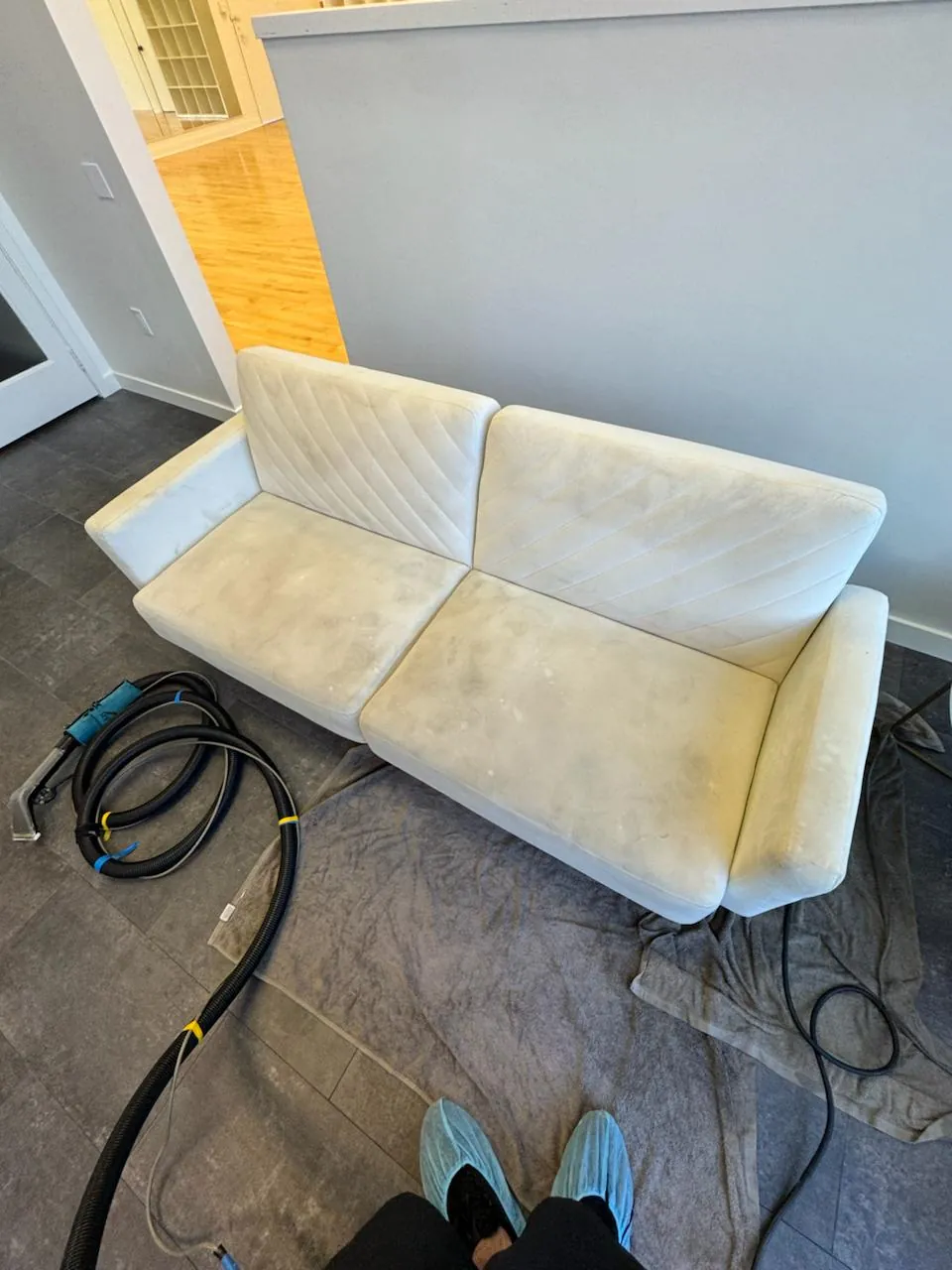
How do you tell a stain from color loss?
Press a damp white cloth on the spot: if color or soil comes onto the cloth, it is a stain or soil that can be treated; if nothing comes off and the area is lighter than the rest, the color is gone. A bleach spot looks pale, orange or yellow, has a sharp edge and feels like the rest of the carpet.
Cleaning lifts what is on the fibers. It cannot put dye back into a fiber that has lost it, and we do not dye or patch carpet or upholstery.
How do you undo bleach stains on carpet?
You cannot undo them by cleaning, because bleach removes the dye from the fiber. The options are to hide the spot with a rug or furniture, to have a carpet repairer patch a piece in, or to have it re-dyed by someone who does that work.
If the bleach has just gone on, rinse the spot with plain water and blot it dry so that it stops spreading, and add nothing else. Do not try a marker, shoe polish or a store dye kit: they rarely match and make a later repair harder. Whether a re-dye can work depends on the fiber, since nylon and wool take dye and polyester and olefin do not and are patched instead, and a remnant from a closet or a stair helps the repairer.
Dyeing and patching are not services we offer. We clean carpet, and we will tell you from a photo whether a mark is soil that cleaning can lighten or bleach that it cannot.
Can a yellowed carpet be restored to its original color?
Sometimes, when the yellow is soil, oil or a cleaner residue; no, when the fiber has aged and turned. Yellow from a spill or from a wicking stain often lightens with cleaning, and yellowing from sunlight and age is in the fiber.
Send a photo of the carpet in daylight to (747) 214-6199, with a spot from under a sofa or rug for comparison, and we say what we expect.
Why are there brown stains on my carpet?
Usually one of five causes: an old spill wicking up from the backing or pad as the carpet dries; browning, when a natural jute backing gets too wet and releases its color; a tannin stain from coffee, tea, juice or soda; rust from metal furniture feet, a vent or a tack strip that got wet; or water from a leak. Brown spots that show up a day or two after a cleaning are nearly always wicking or browning; see problems after cleaning.
A spot that is damp, smells musty or sits near a leak is a moisture problem first: find the source, and see the EPA's page on mold. We clean carpet, including after a leak, a flood or mold, or with a musty smell.
How do you get brown stains out of carpet?
Brown stains are often not what was spilled, but a stain that has wicked up from the backing or the pad as the carpet dried. Clean the spot with a small amount of cool water, blot, and dry it fast with a fan so that the brown is not drawn up again.
Natural backing, such as jute, and paper-based pad are the usual causes. Browning that returns after cleaning needs extraction and fast drying, not more scrubbing.
How do I get dark spots out of carpet?
Find the cause first and match the treatment: a drink or food spill, grease, tracked-in soil, a pet accident or an old stain wicking back up. Vacuum, blot with a white cloth and cool water from the outside in, then dab with the Carpet and Rug Institute's mix of a quarter teaspoon of liquid dish soap in a cup of lukewarm water, or a solvent spot remover for grease, rinse by blotting with plain water and dry it under folded white towels, weighted, for a few hours.
Do not use bleach, colored towels or a soaking. A spot that is black, spreading, damp or musty, or one that comes back after cleaning, is moisture or something under the carpet; see the EPA's page on mold. Burns, rust and dye marks are not soil and may need a repair, which we do not do.
What causes black edges on carpet?
Air that carries fine soot and dust through a gap and leaves it on the carpet, along baseboards, under doors, at stair edges and on the line of a wall below. It is called filtration soiling, and candles, fireplaces and traffic make it worse.
Vacuuming the edge often and sealing the draft help. A line that has been there for years lightens with cleaning and may leave a shadow.
Can you remove traffic lane stains from hallways and entryways?
The soil, yes; the wear, no. A lane in a hallway is oily soil packed into the pile by feet, and cleaning lifts it; if the fibers are crushed or worn, the lane stays darker or flatter after cleaning.
To tell which you have, look at the lane from both ends and brush the pile with your hand: if the shade changes with the angle or the brushing, it is crushed or bent pile, not dirt. Cleaning lifts the soil, but on worn pile it can make the lane stand out more against the clean carpet beside it; a mat, vacuuming the lane every day or two and moving runners slow it down.
The guide to everyday carpet care covers mats, vacuuming and the routes that are worn first.
How does professional carpet cleaning remove discoloration?
By lifting the soil out of the pile: a cleaner loosens it and hot-water extraction rinses it out, and what was color from soil comes back. Stains that are dye stay, and lost color is not restored.
WATERFALL's method is an organic shampoo worked into the carpet and steam extraction after it. The guide to carpet cleaning methods shows how it differs from the others.
How do you prevent carpet discoloration in the future?
Blot spills early, keep mats at the doors, vacuum often, keep the carpet out of direct sun with blinds and clean it before the soil is packed in. Most discoloration is slow soil, so the routine does more than any product.
Can a white linen sofa be cleaned without turning yellow?
Yes, if the cleaning leaves little water and no cleaner behind and the fabric dries evenly and fast. Linen turns yellow or brown when it is over-wetted, when detergent is left in it, when one patch dries slowly and pulls soil to its edge, and when it meets chlorine bleach, direct heat or strong sun.
Read the cleaning code and the maker's care card first, since the word linen alone does not say whether water is allowed. Vacuum, blot a spill at once, never soak one patch, and dry with fans or open windows rather than a hair dryer or a sunny window. For the whole sofa, text the tag and a photo to (747) 214-6199; the fabric-by-fabric guide covers linen itself.
Can you brighten a white or cream sofa that has yellowed?
Often, if the yellow is body oil and soil. Light fabric shows oil as a yellow cast, and a deep clean with extraction rinses much of it out; yellowing that comes from age or sun is in the fiber and stays. See the guide to white and light upholstery.
How do you clean white upholstery that has yellowed?
Vacuum, clean a whole panel at a time with a mild soap in cool water, rinse by blotting and dry fast with air moving; never use chlorine bleach, which turns many fabrics yellow. Test on a hidden spot, and ask by text if the tag says S.
How do you get stains out of a white couch?
Blot at once, use cool water and a white cloth, and do not rub. A white couch shows every mark and every ring, so clean a whole cushion face and dry it fast. Colored cloths can transfer dye onto white fabric, which is why the cloth must be white.
Why does light upholstery reveal the details?
Because dirt, oil and moisture rings contrast with a pale surface, and a light fabric has nothing to hide them. The same soil on a dark fabric is not visible, so light fabric is cleaned more often to look the same.
Can office chair upholstery cleaning help with heavy discoloration?
For the soil and oil in it, yes; for worn or faded fabric, no. Office chairs collect hand and body oil on the arms and seat, and extraction pulls much of it out. Our price list is for homes, so for an office call or text (747) 214-6199 with the size of the job and ask.
Why does rug color bleed, and how do you fix it?
Because the dye was not fixed in the fiber, and water or heat lets it run onto the pile next to it. Stop the water, blot the bleeding area with a white cloth and keep the rug cool; do not heat it or scrub.
A bleed that has dried is a dye problem, and fixing it is a specialist job we do not offer. Text a photo to (747) 214-6199 before a new or colorful rug gets wet.
When is discoloration a job for a professional?
When it covers a cushion, a room or a hallway, has come back after cleaning or sits on a light fabric. We come to your home, and a photo by text tells us whether it is soil. Carpet is priced per room, and every price is on the prices page.
Questions and answers
How to get brown stains out of carpet?
Brown stains are often soil that wicked up as the carpet dried. Cleaning with extraction often lifts them, and some stay.
How to undo bleach stains on carpet?
A bleach spot is color loss, not dirt, so cleaning cannot bring it back. We do not dye or patch carpet.
Can a bleach spot on carpet be fixed or covered up?
Fixed by a carpet repairer, often: a re-dye on nylon or wool, a patch from a remnant on polyester or olefin; covered, with a rug or furniture. Cleaning cannot bring the color back, and we do not dye or patch.
How to get black spots out of carpet?
Black spots can be soil, soot or mold. We clean carpet after mold or soot, and a photo helps first.
How to get rid of dark spots on carpet?
Find the cause: traffic soil lifts with extraction, and dye or burn marks do not. A photo helps us tell which.
Is it a stain or color loss?
A stain sits on the fiber and may lift; color loss is the dye gone and will not. A photo and the history of the spot tell us which.
How to prevent carpet discoloration in the future?
Blot spills, use mats, vacuum often and keep sun and cleaners off the fibers. Strong cleaners cause bleaching.
Can traffic lane marks in a hallway carpet be removed?
The soil in the lane, often; worn or crushed pile, no. Look along the lane from both ends: if the shade changes with the angle, it is the pile, and cleaning can make a worn lane stand out more next to the clean carpet.
Prices and booking
More guides
- Stain removal: all guides
- How to get grease and oil out of a couch — Absorb the oil first with cornstarch or baking soda, then lift the rest with dish soap in cool water; body oil builds up in layers and needs the whole cushion cleaned.
- Water stains on a couch, rust and soot — A water ring is cleaned by treating the whole panel evenly and drying it fast; rust, soot and burns are different problems and some of them stay.
- How to get old stains out of a couch — Old stains often lighten and may not vanish; what makes one permanent is dye, heat, time, fiber and what was tried before.
- How to clean a white fabric couch — Vacuum, blot, clean with little water and extract it all; yellowing from age or sun does not come out.
Sources: The Carpet and Rug Institute (The carpet and rug industry's trade association, for how carpet is made, cared for and cleaned.); EPA on mold (The EPA's guidance on mold and moisture in the home.)